Door Won't Close or Lock? 7 Common Door Problems and How to Fix Them
Doors are opened and closed dozens of times a day, so it's no surprise they eventually start to complain. A door that sticks, drags across the floor or refuses to lock is more than an annoyance. It can damage your floors and frames, and a main door that doesn't lock properly is a real security risk.
Singapore's humid climate adds another challenge, as timber and composite doors absorb moisture and swell. Here are seven of the most common door problems, what causes them and how they can be fixed.
1. The Door Sticks or Jams
A door that rubs against the frame or needs a hard push to close is one of the most common complaints. There are two usual causes: swelling from humidity or water, and loose hinges that let the door drop out of line.
Start by checking the hinges. If the screws are loose, tightening them may be enough. If the door has swollen, it may need to be carefully planed and resealed so it fits the frame again. Sealing the edges also helps stop the door from absorbing more moisture in future.
2. The Door Sags or Drags on the Floor
Heavy doors pull on their hinges over time. When the top hinge screws loosen or the screw holes wear out, the door sags and its bottom edge scrapes the floor. Left alone, this can leave marks on tiles and timber flooring.
Replacing short screws with longer ones that reach the frame behind often fixes sagging. Worn or bent hinges should be replaced, and very heavy doors may need an extra hinge for proper support.
3. The Door Won't Latch
If the door closes but doesn't click shut, the latch is probably missing the strike plate on the frame. This happens when the door or frame shifts slightly over time. Adjusting the strike plate or realigning the door usually solves the problem quickly.
4. Locks and Handles Are Stiff or Faulty
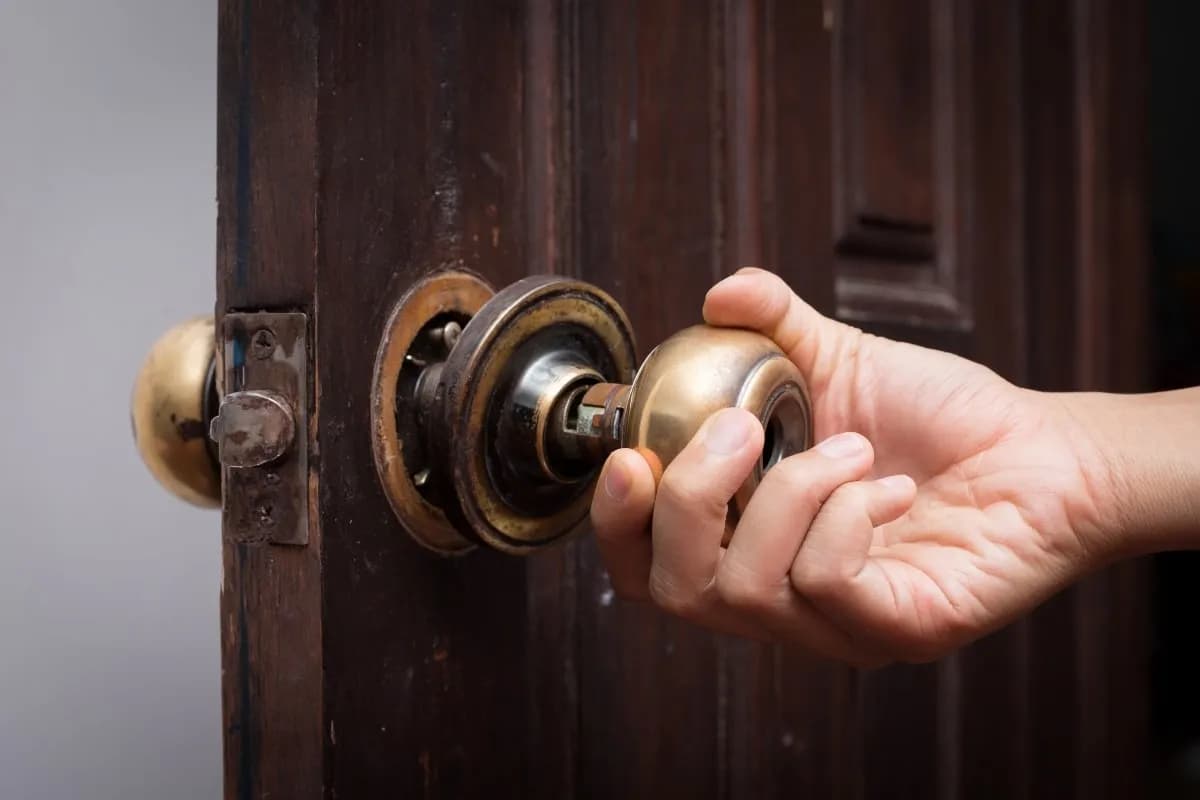
Locks and handles wear out with daily use. Common signs include a key that's hard to turn, a handle that feels loose or doesn't spring back, and a lock that only works when you push or pull the door.
A stiff lock may simply need cleaning and the right lubricant.
A loose handle often needs its fixing screws tightened.
Worn or broken lock mechanisms should be replaced to keep your home secure.
If your main door lock is stiff, don't wait for it to fail completely. Getting locked out, or being unable to lock up at night, is far more stressful than an early repair.
5. Sliding Doors Are Hard to Move
Sliding and folding doors rely on tracks, rollers and guides. Dirt, sand and debris build up in the track, while rollers wear out over the years, leaving the door heavy, noisy or prone to jumping off its track.
Clean the track regularly with a vacuum and a damp cloth. If the door still drags, the rollers or guides may need to be adjusted or replaced. Damaged tracks can also be repaired so the door glides smoothly again.
6. Squeaky Hinges
A squeaking door is usually the easiest fix of all. Applying a suitable lubricant to the hinge pins often silences it. If the squeak returns quickly, or the hinge is rusty or bent, replacing the hinge is a better long-term solution.
7. Swollen or Damaged Bathroom Doors
Bathroom doors face constant moisture. Over time, timber doors can swell, delaminate or start to rot at the bottom edge, especially where water splashes during showers. Small areas of damage can sometimes be repaired and resealed, but badly swollen or rotting doors are usually better replaced.
When replacing a bathroom door, it's worth choosing a material designed for wet areas, such as a moisture-resistant laminate or PVC door, so you don't face the same problem again in a few years.
Repair or Replace: How to Decide
Most door problems can be repaired, and a repair is usually the more economical choice. Replacement makes more sense when:
The door is badly warped, cracked or rotting
Water damage has spread through the door
The door no longer feels secure, even after repairs
You're renovating and want a new style or better material
For HDB flats, note that main doors must meet HDB's requirements, so check these before choosing a replacement main door.
Choosing a New Door
If replacement is the right choice, think about where the door will be used before picking a style:
Main doors should be solid and secure, with quality locks and hinges that can handle daily use.
Bedroom doors can focus on looks and noise reduction, with a finish that matches your interior.
Bathroom doors need to resist moisture, so laminate or PVC options are often more practical than plain timber.
Sliding and folding doors save space and suit balconies, kitchens and wardrobes, as long as the tracks and rollers are good quality.
Accurate measuring matters just as much as the door itself. Frames in older homes are rarely perfectly square, and a door that's fitted carefully will close, latch and lock properly for years.
Simple Tips to Keep Doors Working Smoothly
Tighten hinge and handle screws whenever they feel loose.
Keep sliding door tracks clean and free of debris.
Wipe up water around bathroom doors to limit swelling.
Avoid slamming doors, which loosens hinges and frames.
Fix small problems early before they damage frames or floors.
Get Your Door Fixed by FM Builder
FM Builder's door repair and installation services cover main doors, bedroom and bathroom doors, sliding and folding doors, locks, handles, hinges and closers. We always check whether a repair will do the job before suggesting a replacement, and you get an upfront quote before any work begins.
If a door has been damaged by a leak, our water leakage repair team can fix the source too. Need urgent help with a door that won't lock? We're available 24/7. Contact us by phone or WhatsApp with a photo of the problem.