False Ceiling Guide for Singapore Homes: Types, Benefits and Design Ideas
A false ceiling can change the feel of a room more than almost any other upgrade. It hides untidy wiring and pipes, adds space for modern lighting and gives your home a clean, finished look. It's no wonder false ceilings have become a popular part of renovations in Singapore's HDB flats, condos and landed homes.
If you're considering one, this guide covers what a false ceiling is, the main types, the benefits and the details worth planning before installation. We'll also look at partition walls, which often go hand in hand with ceiling works.
What Is a False Ceiling?
A false ceiling is a second ceiling installed below the original concrete slab. In homes, it's usually made from gypsum boards fixed to a lightweight metal frame. The gap between the false ceiling and the slab hides electrical wiring, air-conditioner piping and other services, while the visible surface is finished smoothly and painted.
Benefits of a False Ceiling
Hides wiring and pipes: exposed trunking and air-con pipes are tucked out of sight.
Better lighting options: recessed downlights, cove lighting and LED strips can be built in neatly.
Defines spaces: a ceiling feature can separate a dining area from a living room without a wall.
Covers imperfections: uneven or stained original ceilings can be hidden behind a fresh surface.
Finished look: clean lines make the whole room feel more polished.
Popular Types of False Ceilings
Flat Gypsum Ceiling
A simple, flat ceiling across the whole room or part of it. It's clean and modern, and works well with recessed downlights.
L-Box Ceiling
An L-box runs along the edge of a room, usually to conceal air-conditioner piping, curtain tracks or wiring. It's one of the most practical and common options in Singapore homes, as it hides services without lowering the ceiling across the whole room.
Cove Lighting Ceiling
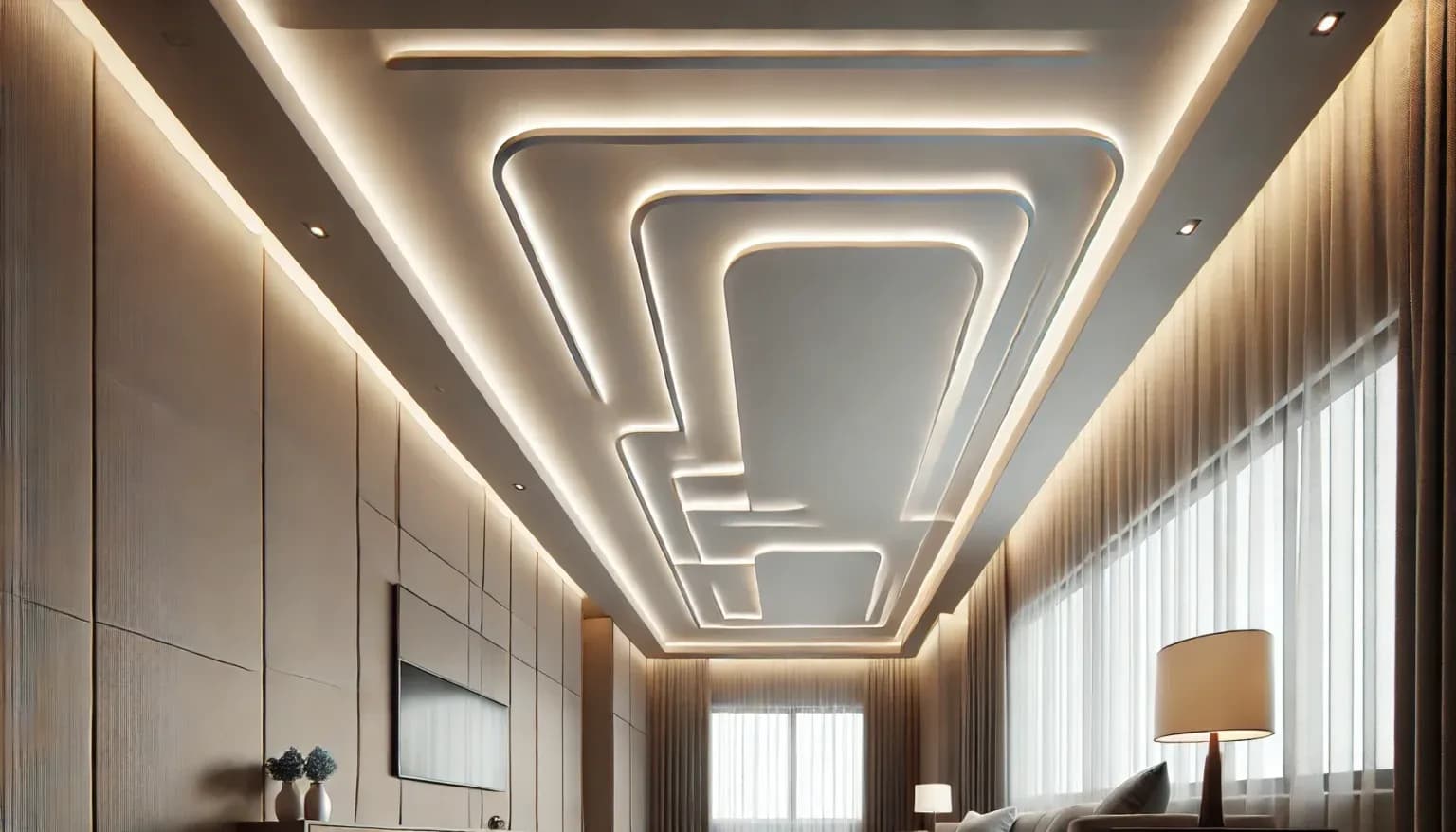
A cove ceiling includes a recessed trough where LED strips are hidden. The light washes softly across the ceiling, creating a warm, relaxing glow that's popular in living rooms and bedrooms.
Tiered or Feature Ceiling
A tiered ceiling uses two or more levels to add depth and highlight an area, such as above a dining table or bed. It's a good way to add character without cluttering the room.
Suspended Grid Ceiling
Common in offices and shops, grid ceilings use removable panels in a metal frame. They allow easy access to services above, which makes maintenance simple for commercial spaces.
The best ceiling design is often the simplest one that hides what you need to hide and gives you the lighting you want.
What to Plan Before Installing a False Ceiling
Ceiling height: a false ceiling lowers the room slightly. In rooms with lower ceilings, an L-box or partial feature usually feels more open than a full drop.
Lighting layout: decide where downlights, cove lights and switches will go before work starts, so wiring can be placed correctly.
Air-conditioner access: include access panels near air-con units and pipe joints, so servicing doesn't require cutting the ceiling later.
Wet areas: in kitchens and bathrooms, moisture-resistant boards are the better choice.
Approvals: for HDB flats and condos, check the HDB or MCST renovation guidelines before work begins.
Partition Walls: Creating New Rooms Without Major Works
Gypsum board partitions, also called drywall partitions, are a quick way to change a layout. They're lighter and faster to build than brick walls, and can be used to create:
An extra bedroom or study
A walk-in wardrobe or storage room
Separate offices or meeting rooms in a commercial space
Standard partitions reduce some noise between rooms. For better sound control, insulation can be added inside the wall, or thicker boards can be used.
Common Ceiling Problems and Repairs
Even a well-built ceiling can be damaged over time. Hairline cracks may appear at board joints, and water leaks from above can cause stains, sagging or mould. Small cracks can be repaired and repainted. Water-damaged sections should only be repaired after the leak itself has been fixed, otherwise the damage will return.
How a False Ceiling Is Installed
Installation usually follows a clear sequence. First, the room is measured and the layout is marked out. A lightweight metal frame is then fixed to the slab, and electrical wiring for lights is run through it. Gypsum boards are fixed to the frame, joints are taped and skimmed, and the surface is sanded smooth. Finally, the ceiling is painted and the lights are fitted. A neat result depends on careful work at every stage, especially the joints and corners.
What Affects the Cost of a False Ceiling?
Every ceiling project is priced differently. The main factors are:
Area and design: a simple L-box costs less than a full tiered ceiling with cove lighting.
Lighting: the number of downlights, LED strips and switches affects both materials and electrical work.
Board type: moisture-resistant boards for wet areas cost more than standard boards.
Site conditions: high ceilings, existing damage or old ceilings that must be removed first add to the work.
An on-site measurement gives you an accurate, itemised quote instead of a rough estimate. It's also the best time to discuss design ideas, lighting positions and any problem areas, such as old water stains or cracks, so they can be dealt with as part of the same job.
Caring for Your False Ceiling
False ceilings need very little maintenance. Dust them occasionally, keep air-conditioners serviced so condensation doesn't overflow into the ceiling, and look out for stains, cracks or sagging. If you spot a water stain, have the source checked quickly, as wet gypsum board weakens and can grow mould.
Upgrade Your Space with FM Builder
FM Builder's ceiling and partition works include false ceilings, L-box and cove lighting designs, ceiling repairs and gypsum board partitions for homes, offices and shops. We measure on-site, help you plan the layout and lighting, and give you an upfront quote before work starts.
Because we also handle electrical works and painting, your new ceiling can be wired, finished and painted by one team. Contact us to discuss your ideas.